

Table of Contents
Choosing the right pulley is a important part of building a reliable wire rope system. The component needs to work smoothly with the rope, handle the expected load and fit into the equipment where its being installed. A poor match can increases wear, create extra friction and hurt the overall performance of the system.
For businesses that’s looking for a dependable pulley manufacturer, understanding the key factors involved in selection can make the buying and design process a lot easier.
Understanding the Role of a Pulley
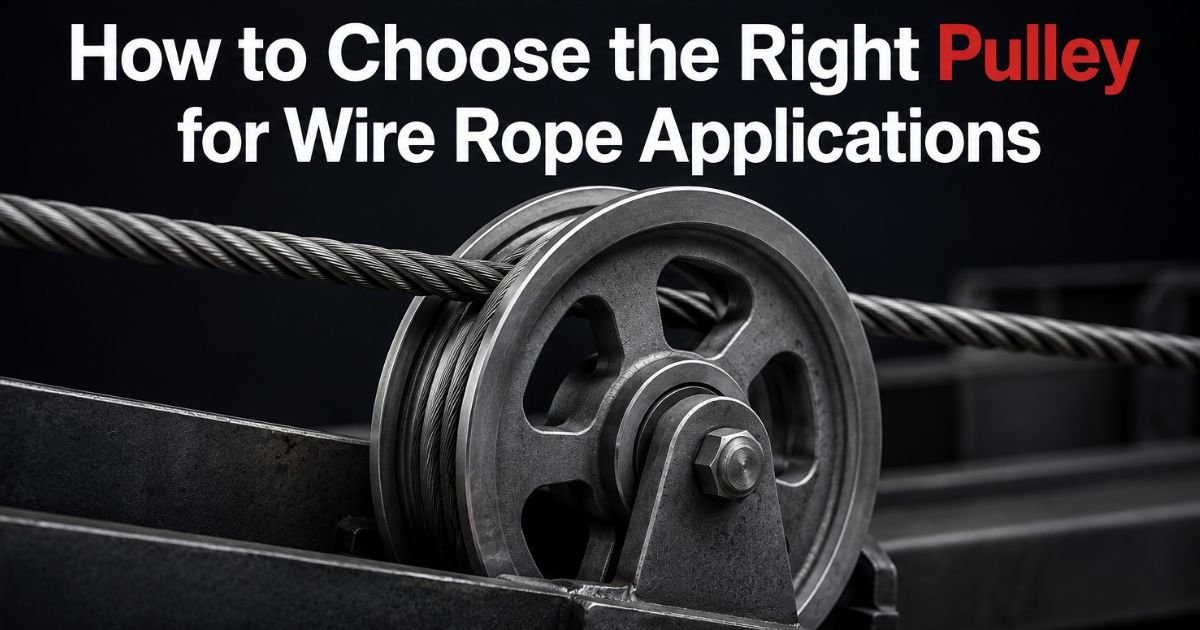
A pulley, often called a sheave in wire rope applications, guides the rope and changes it’s direction while helping transfer or support a load. These parts are commonly used in lifting equipment, material handling systems, industrial machinery and other specialized mechanical equipment.
Although a pulley may look like a simple component, its dimensions and build can have a real effect on the complete cable system. The rope need to sit correctly within the groove and move smoothly, without too much friction or rubbing.
Key Factors to Consider When Selecting a Pulley
1. Match the Rope Diameter
The first thing to consider should be the diameter of the wire rope being used, the groove needs to give enough support while still letting the rope move freely.
A groove that’s too narrow can put excessive pressure on the rope, while an unsuitable groove can allow unwanted movement. checking the rope specifications before picking the pulley can help prevent early wear and keep operation consistent.
2. Consider the Working Load
The expected working load play an important role in component selection. Different systems experiences different loads and the component you pick should be right for the application’s operating conditions.
It’s also important to think about peak loads and repeated loading. Equipment that runs continuously or handles changing loads may need a different configuration than equipment thats used only once in a while.
3. Evaluate the Sheave Diameter
Sheave diameter affects how sharp the wire rope bends during operation. Smaller diameters can result in more bending stress, specially when the equipment operates frequently.
Picking an appropriate diameter can help cut down unnecessary fatigue and support a longer rope service life. Engineers should therefore consider the relationship between rope diameter and sheave diameter during the design process, this matters more than most people realise.
4. Check the Groove Profile
The groove is the point where the rope makes direct contact with the component, so it’s design is particularly important.
A properly sized groove help support the rope and keep alignment while allowing smooth movement. The groove profile should match with the rope construction and the specific operating needs of the equipment.
When Custom Solutions Make Sense
Standard components do not always meet the requirements of specialized machinery. Limited installation space, unusual mounting arrangements, specific load requirements, and unique equipment dimensions can make a standard option hard to use.
In these situations, Custom Pulleys can give greater flexibility. Customized solution can be build around the dimensions and operating requirements of the equipment instead of forcing a standard component into a configuration that don’t fit.
Custom solutions can be especially useful for OEM equipment and specialized machinery where proper component integration matter. they can also help simplify the design process when several cable related components needs to work together.
Selecting the Right Wire Rope Sheave
A wire rope sheave should be evaluated as part of the complete cable system, not as a individual component. Rope construction, diameter, operating speed, load, bending conditions and environmental exposure can all influence the selection.
For example, equipment that runs continuously may have different requirements then a system that’s used only occasionally. Similarly machinery exposed to moisture, dust, chemicals, or outdoor conditions may need extra consideration when selecting materials and finishes.
Looking at these factors before purchasing can help reduce compatibility issues and support dependable operation.
Material Selection for Different Applications
The material used in a pulley can effect its durability, maintenance requirements and suitability for a particular environment.
Industrial applications often need strong, durable materials that’s capable of handling repeated mechanical loads. Applications exposed to moisture or corrosive environments may need more attention to corrosion resistance.
Temperature, contaminants, operating frequency, and expected service life should also be considered. Picking a material based on the actual working environment can help improve long term performance.
Consider the Complete Cable Assembly
A pulley does not work independently, it operates together with the wire rope, termination components, mounting hardware, and other parts of the mechanical system.
For this reason, evaluating the complete assembly can be more effective then selecting each component separately. Compatibility between the rope and pulley, as well as the mounting arrangement and other hardware, can effect system performance.
A complete-system approach can also make installation and maintenance easier while helping to reduce the risk of component mismatch.
The Importance of Working With an Experienced Manufacturer
Selecting the right component often involves more then just comparing dimensions and specifications. An experienced supplier can help evaluate application requirements, identify suitable materials and figure out whether a standard or customized solution is appropriate.
Sava Cable provides pulley solutions for different wire rope and mechanical applications. Being a experienced mechanical cable manufacturer, the company also supports a broad range of mechanical cable and wire rope requirements.
Final Thoughts
Choosing the right pulley requires careful thought about several factors, including rope diameter, working load, sheave diameter, groove design, material and operating environment.
Rather than picking a component based only on size or whats available, its better to think about how it will perform as part of the complete wire rope system. For specialized applications, a customized solution may give the flexibility needed to get proper fit and reliable operation.
By matching the component to the application and working with a experienced manufacturer when needed, businesses can build wire rope systems that operates efficiently and provide dependable service over time.








Leave a Reply